Streamline research and creative workflows using advanced language models.
Key Takeaways
This article explores how cultural institutions can use generative tools to enhance visitor engagement and operational efficiency. By integrating these systems thoughtfully, museums can streamline their creative output while maintaining a high standard of curatorial integrity.
Streamline research and creative workflows using advanced language models.
Improve visitor accessibility through simplified and inclusive label writing.
Design logical gallery flows supported by thematic narrative structures.
Repurpose content effectively across digital and multi-channel platforms.
Establish robust ethical and fact-checking protocols for new content creation.
Leveraging Claude for museum storytelling and interpretation
Understanding Claude's ability to synthesise complex research
Museums hold vast archives of primary research, which often remains inaccessible to the public due to its complexity. By using Claude to process dense historical documents and technical reports, curators can quickly surface the human stories hidden within academic data. This synthetic power allows for more nuanced interpretations of collections that resonate more deeply with an audience.
Using Claude as a collaborative creative partner for curators
At Noran Design, we have observed how AI can serve as a catalyst for creative exploration during the early stages of exhibition design. Rather than working in isolation, the curatorial team can dialogue with the tool to brainstorm thematic titles or explore non-traditional narrative angles. The AI provides a sounding board that challenges initial assumptions and pushes the creative process toward more innovative outcomes.
Drafting initial concept notes based on historical themes
When tasked with large-scale projects, starting from a blank page often presents a significant bottleneck for busy teams. Utilizing AI to generate structured concept notes provides a firm foundation, allowing the team to focus their energy on refining the narrative arc and verifying historical context. This workflow ensures that the team maintains momentum without sacrificing the depth of the finished exhibition.
Aligning AI outputs with established institutional messaging
Consistent brand presence is essential for long-term relevance. Noran Design helps institutions build stronger digital infrastructure, ensuring that your institutional voice remains consistent regardless of the output medium. By providing the model with detailed style guidelines or previous successful exhibition texts, curators ensure that every output adheres to the specific tone and values of their museum.
Writing accessible and engaging exhibition labels

Simplifying technical terminology for general audiences
Exhibition labels often suffer from jargon that obscures the significance of the objects on display. By using clear, accessible language, museums can invite a broader range of visitors to engage with history. This process preserves the scholarly work while ensuring the information remains inviting and comprehensible to a non-specialist audience.
Optimising text length for visitor reading habits
Visitors rarely read long-form content in gallery spaces, preferring concise impact over volume. Shortening text requires a disciplined editorial approach that respects the visitor’s time while conveying essential themes. Communicating complex information simply becomes the primary challenge for the curation team here.
Creating inclusive copy for diverse demographic groups
Inclusive writing ensures that every visitor feels represented within the narratives of the museum. By specifically prompting for inclusive language, staff can avoid exclusionary phrasing and address wider perspectives on heritage. This commitment to diversity ensures a welcoming experience for families, international tourists, and lifelong learners alike.
Implementing internal museum style guides via custom instructions
Institutional consistency is maintained when style guides are baked into the drafting process. By adopting a standard set of formatting and vocabulary rules, staff can ensure that every label sounds like the institution, not just the individual author. This level of quality control is vital for maintaining professional standards across rotating displays.
Structuring visitor narratives and gallery flow
Designing logical progression paths for exhibition zones
Success in gallery design depends on a seamless physical experience. Staff can utilize AI to draft navigation plans that prioritize the visitor's logical progression through the space. This process involves these core steps:
Identifying key touchpoints for visitor flow
Crafting thematic threads for each gallery zone
Integrating dynamic prompts that spark curiosity
Balancing information density with emotional impact
By following this structure, curators ensure that the visitor feels guided rather than directed, allowing for moments of discovery along the way.
Creating hooks to sustain engagement across large spaces
Large galleries often present a challenge for maintaining audience attention from beginning to end. Using narrative hooks at transitions between rooms can help maintain interest in the subject matter. These hooks serve as a narrative bridge that connects previous sections to the upcoming content, reinforcing the overall message.
Integrating interactive prompts into room descriptions
Visitors enjoy opportunities to participate in the storytelling rather than simply acting as passive observers. Interactive prompts that encourage critical thinking or personal reflection can turn a static gallery space into a dynamic site of learning. This engagement strategy provides the necessary interactivity to keep the experience fresh for repeated visits.
Balancing object-focused facts with thematic storytelling
The expert approach focuses on sustainable digital growth, helping museums map their content across different platforms while maintaining accessibility. By layering thematic storytelling over object data, curators provide a richer context that justifies the inclusion of specific items. This approach avoids a dry, catalogue-like feel, making the exhibition more than the sum of its parts.
Adapting content for digital and multi-channel museum use
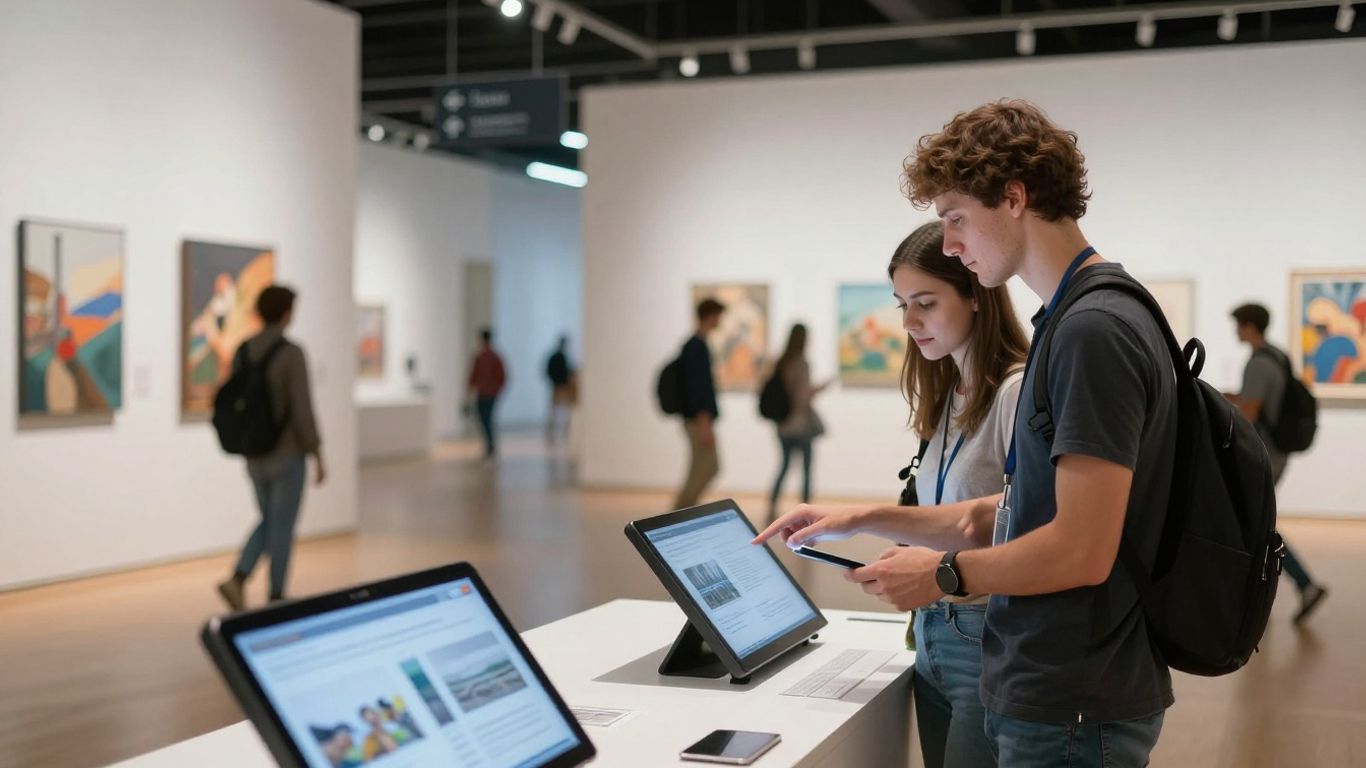
Repurposing gallery copy for social media engagement
The effort required to craft original gallery content should be utilized fully across all digital channels available to the museum. By repurposing label text into concise, engaging social media posts, staff can drive traffic from online platforms back into the physical exhibition space.
Tailoring exhibition narratives for mobile apps and audio guides
Mobile applications require a unique approach to storytelling compared to printed labels. | Format | Audience | Primary Goal |
|---|---|---|
| Social Media | General Public | Drive engagement |
| Audio Guides | Visitors On-site | Depth of context |
| Mobile Apps | Interactive Users | Wayfinding/depth |
Each of these formats requires careful adaptation to ensure the visitor has the right depth of information when they need it most.
Creating educational activity resources for school groups
Teachers often look for curated resources to extend the value of a museum visit long after the bus ride home. Creating downloadable activity sheets or discovery kits based on the themes of the exhibition provides immense value to school groups. These resources reinforce learning objectives and solidify the museum’s position as a hub for education.
Generating short-form snippets for digital wayfinding
Effective wayfinding depends on instant legibility. By distilling narrative content into short, punchy snippets, museums can guide visitors throughout the building. These small doses of information help ground the visitor within the broader exhibition theme without overwhelming them in transition areas.
Establishing best practices for AI-driven museum workflows
Developing robust fact-checking and curation workflows
Every piece of AI-generated content must undergo rigorous human review to ensure it meets scholarly standards. Museums should implement a multi-stage validation process that includes cross-referencing with internal databases and peer review by subject specialists. This verification ensures that AI content creation for museums remains rooted in authentic scholarship.
Maintaining human oversight during the iterative editing process
AI serves as a powerful initial drafting tool, but humans must retain the final decision-making power. The iterative editing process allows the team to correct errors, refine the tone, and inject the specific institutional perspective that software cannot replicate. Oversight is not a bottleneck; it is the vital final stage of quality curation.
Balancing AI efficiency with authentic curatorial voice
Curatorial voice is what gives a museum its unique personality, and it is irreplaceable. Staff must ensure that the AI is used to amplify this voice rather than replace it with a generic, uniform tone. By maintaining control over the final drafts, the team ensures the content remains idiosyncratic and deeply informed.
Managing organisational constraints and intellectual property concerns
Legal and institutional constraints surrounding collections data must always be respected. When using generative tools, it is imperative that internal data remains secure and that property rights are managed with extreme care. Establishing clear protocols for data inputs keeps the institution safe while still reaping the benefits of modern digital workflows.
Addressing ethical considerations in AI content creation for museums
Mitigating bias in generated historical narratives
Language models are trained on internet data, which can carry hidden biases. Curators have a responsibility to actively inspect all generated text for historical inaccuracies or discriminatory assumptions. By identifying these biases early, the team can ensure that the museum’s narratives remain inclusive and equitable.
Ensuring cultural sensitivity regarding heritage and provenance
Provenance research is a delicate area that requires precision and deep cultural awareness. AI should never be used as an authoritative source on claims regarding heritage and ownership. Instead, it should act only as a tool for organizing established documentation, leaving the expert interpretation of provenance to human historians who understand the complexities involved.
Communicating the use of artificial intelligence transparently to visitors
Transparency is a cornerstone of museum ethics. Visitors should feel confident that the information they consume has been curated and verified by experts, even when AI-assisted tools participate in the process. A simple, visible statement regarding the museum’s ethical use of technology helps build trust with the community.
Protecting sensitive collection data and museum research integrity
Maintaining the integrity of research data is paramount for any cultural institution. Whether dealing with digital archives or sensitive provenance records, the staff must be the gatekeepers. Secure systems and clear guidelines ensure that the power of AI does not threaten the fundamental reliability of museum research.
Conclusion
By embracing contemporary digital tools with caution and intentionality, museums can evolve into faster, more accessible spaces for their communities. The goal remains to enhance the human connection to history, using innovation to support the vital work of curators rather than diminishing it.
Frequently Asked Questions
Can AI replace human curators in museum settings?
AI is designed to act as an assistant that automates mundane tasks, not as a replacement for the interpretative and critical roles held by human professionals.
How do museums ensure that AI content is accurate?
Institutions maintain accuracy by integrating AI within established fact-checking workflows, ensuring that every generated draft is verified by human subject-matter experts.
What are the main benefits of using AI for exhibition labels?
AI allows for the rapid creation of varied, accessible versions of label text that can be tailored to different visitor demographics, such as children or international visitors.
Does using AI affect the professional voice of the museum?
When properly controlled with internal style guides and rigorous editing, AI helps maintain consistency across content, actually strengthening the institution's distinct voice.
How can museums handle ethical concerns regarding bias?
Museums mitigate bias by treating AI outputs as raw material that must be carefully audited by staff who are trained to spot and correct problematic language.
Can small museums afford to adopt these AI-driven workflows?
Many foundational AI tools are cost-effective, allowing smaller institutions to improve their operational efficiency and digital presence without needing high-end resources.
Should I disclose the use of AI to museum visitors?
Transparency is considered a best practice in the cultural sector, and informing visitors about the use of technology builds trust and demonstrates a commitment to ethical standards.