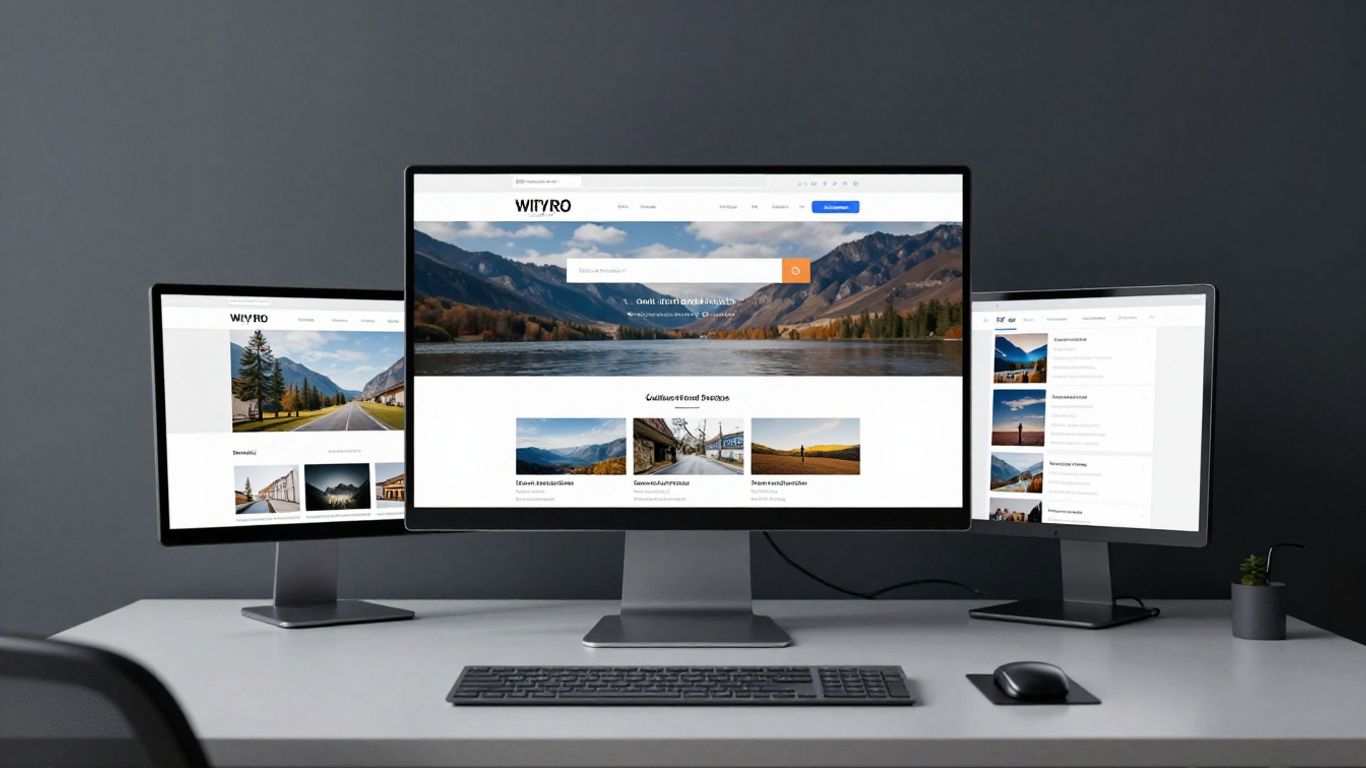
Align your proposal with specific mission objectives to show strategic intent.
Key Takeaways
Securing funding for a digital infrastructure project requires framing your request around organisational growth and long-term sustainability rather than just aesthetic updates. This article outlines how to build a compelling narrative for your grant proposal and demonstrate clear impact.
Align your proposal with specific mission objectives to show strategic intent.
Leverage accessibility as a core pillar of your inclusive design strategy.
Use analytical data to prove the necessity of your digital transformation.
Define clear milestones to provide transparency in project management.
Emphasise technical scalability to ensure lasting value for funders.
Aligning the redesign with your organisation's mission
Demonstrating strategic growth through digital presence
When you approach a grant proposal, you need to articulate how your digital presence serves your overarching mission. For organisations aiming to scale, a website is not merely a public face; it is a critical tool for operational efficiency. By referencing strategic design and digital growth, you show that your digital infrastructure is built to support long-term goals. Every feature you propose should directly contribute to your ability to reach more beneficiaries, streamline user paths, or facilitate deeper engagement with your programming.
Linking visual identity to artistic vision
A cohesive visual identity is essential for maintaining trust and professional credibility. When your digital interface reflects the quality of your physical exhibitions or artistic programmes, donors see a mature organisation. Aligning your graphics and user interface with your brand identity helps funders understand that you have a unified vision. This cohesion prevents the scattered look often associated with neglected sites and demonstrates that your project is grounded in a cohesive brand strategy rather than personal preference.
Overcoming the perception of vanity projects
Funders are naturally wary of proposals that appear to focus on superficial design without functional utility. You must pivot the conversation toward tangible operational benefits rather than just pixels or colour palettes. Explain how the platform reduces manual administrative tasks or provides a more reliable foundation for future digital expansion. By focusing on utility, you shift the perspective from a "makeover" toward a necessary evolution that sustains your organisation's ongoing viability.
Prioritising accessibility and inclusive design

Meeting WCAG standards for diverse audiences
True accessibility goes beyond simple compliance; it is an ethical imperative for any public-facing institution. When applying for grants, demonstrate your plan to meet or exceed current accessibility guidelines to ensure that your content is usable by everyone, regardless of their browsing technology. This commitment to inclusivity shows potential funders that you value equity as much as innovation, positioning your project as a responsible investment in community service.
Enhancing reach for underserved community members
Inclusive design is a primary driver for expanding your reach to populations that have been historically excluded from digital platforms. By prioritising simplified navigation and read-aloud features, you directly lower the barriers to entry for those with visual or motor impairments. Demonstrating how your planned site accommodates diverse community needs provides a strong argument for why your organisation requires funding to better serve the public interest.
Ensuring responsive design for mobile-first users
The vast majority of your audience will interact with you through a mobile device first. A strategy that is not built for responsive experiences is essentially exclusionary in today's digital climate. Your grant application should highlight how the new interface will adapt fluidly across all screen sizes to maintain a professional experience that keeps visitors engaged without friction or technical failures.
Building a data-driven justification
Using analytics to identify current site friction
Most organisations realise a redesign is necessary when they see a drop-off in user engagement or excessive support queries. You should use Google Analytics or other performance tools to identify exactly where users hit a wall. Showing a direct correlation between site friction and lost opportunities provides the objective evidence reviewers need to support your application. Consider the following common issues that necessitate a shift in your digital operations:
Issue Area | Observed Friction | Proposed Improvement |
|---|---|---|
Navigation | High bounce rate on menus | Intuitive structural reorganisation |
Application | Slow form submission | Streamlined digital workflow |
Engagement | Low content interaction | Immersive storytelling modules |
Highlighting improvements in user conversion rates
You should outline specific, measurable targets for the improved platform, such as increased donation capture or higher workshop registration rates. These metrics allow you to demonstrate that the new site serves as a catalyst for growth. Providing clear projected outcomes helps grant committees understand that the funds will be used to improve institutional productivity and financial sustainability in a predictable manner.
Predicting audience engagement through better navigation
Better navigation isn't just about organising links; it is about guiding your audience toward meaningful action. By mapping out potential user journeys, you show that you understand your audience's intent. When you present this as part of your grant package, you illustrate that your team has performed the necessary groundwork to ensure the new site will be well-received, effectively removing the guess-work from your developmental projections.
Elevating your digital brand and storytelling

Creating immersive experiences for digital exhibitions
Digital exhibitions offer a unique opportunity to expand your artistic footprint beyond physical walls. By proposing an interface designed for rich multimedia storytelling, you prove that your organisation is at the forefront of digital culture. This investment in the digital operations of your institution ensures that even remote visitors can experience the depth and impact of your collections, which is a powerful selling point for modern funders.
Increasing donor trust through a professional interface
A disjointed or outdated website can subtly erode donor trust. A professional interface serves as proof that your organisation manages its resources with care and attention to detail. This level of professionalism is often the difference between a successful appeal and one that is overlooked by larger trusts that value fiscal responsibility and institutional pride.
Showcasing the impact of previous artistic work
Your website should be a living archive that demonstrates the long-term impact of your artistic mission. By investing in a section dedicated to documenting past successes, you prove that your organisation has a history of delivering on its promises. A well-designed portfolio section allows you to:
Highlight successful exhibitions with high-quality visual documentation.
Provide downloadable annual reports that build transparency and trust.
Link to press features that validate the significance of your programming.
Feature testimonials from community partners and educational leaders.
This evidence archive serves as visual justification for the work you do daily, allowing funders to see the tangible results of their potential support.
Addressing technical sustainability and security
Reducing technical debt to lower long-term maintenance costs
Technical debt is the hidden cost of outdated systems that require exorbitant time to repair. You must clearly explain that your project is not just about building something new, but about eliminating legacy infrastructure that drains your budget. By focusing on building effective digital operations rather than temporary fixes, you convince funders that your approach creates long-term financial stability for your organisation.
Enhancing cybersecurity for donor and patron data
Protecting the data of your donors is a non-negotiable requirement for modern organisations. In your security plan, outline the measures you will take to upgrade your protocols, such as moving to more secure hosting or implementing modern authentication. A clear focus on data privacy shows that you are a responsible steward of sensitive information, which is a critical consideration for both government and private foundations.
Planning for future-proofed digital infrastructure
Your infrastructure should be built on modular components that allow for updates without requiring a complete rebuild every few years. This modularity ensures your foundation can adapt to new technological requirements, providing a superior return on the donor's investment. When you frame your project as a future-proofed digital infrastructure, you signal to the committee that your organisation is planning for the next decade, not just the next fiscal quarter.
Outlining the project timeline and resource management
Defining clear milestones for grant reporting
Grant administrators prize transparency and accountability. By dividing your project into phases—such as discovery, design, development, and implementation—you show that you have managed the risk associated with this project. Clear milestones provide a framework that makes regular reporting easy and ensures the team remains on track throughout the build, preventing the drift common in poorly managed digital projects.
Selecting external expertise and creative partnerships
Choosing the right partner is vital for your success. Instead of hiring generalists, demonstrate that you are selecting professional specialists capable of delivering high-quality outcomes. When you partner with experienced studios, you ensure the project is handled with a level of rigor that avoids the common pitfalls of do-it-yourself website projects, saving your organisation money and time.
Providing realistic budget breakdowns for funders
Your budget should be itemised in a way that respects the funder's need for fiscal clarity. List specific allocations for development, design, and ongoing support. Being completely transparent about where every pound is going helps build confidence with the committee, proving that you have a firm grasp of the project's financial requirements and that you will manage the grant funds with maximum efficiency.
Conclusion
Securing the funding necessary to transform your digital presence is an exercise in demonstrating how technology serves your mission. By focusing on sustainability, accessibility, and measurable growth, you move your proposal away from a wish list and into the category of a strategic investment. With a clear plan, supported by evidence and aligned with your organisation's long-term vision, you provide funders with the confidence that their support will yield significant, lasting results for your community and your artistic practice.
Frequently Asked Questions
Will a website redesign increase my chances for future grants?
A professional digital presence acts as a testament to your organisation's capability and stability, which builds credibility with future funding bodies.
Do I need to include technical details in my grant application?
You should highlight the broad technical outcomes—such as better security or improved speeds—without getting bogged down in overly complex jargon.
What are the most important elements for a successful proposal?
The most successful proposals typically focus on how the website will directly benefit your audience and help your organisation meet its core mission objectives.
How can I prove that the website needs updating?
Using concrete analytics, such as engagement drop-offs or reports of user difficulty, provided through tools like Google Analytics can effectively demonstrate the need.
Should I focus more on design or functionality in my proposal?
Functionality is far more important to grant committees, as it directly impacts your ability to operate effectively and meet your service goals.
Are there specific grants for accessibility upgrades?
Many charitable trusts and government agencies offer funds specifically targeted at improving digital inclusion and accessibility for underserved groups.
Is it better to hire an agency or do it in-house?
Grant committees generally prefer to see evidence of professional oversight which often involves experienced external partners who can ensure long-term stability and success.