AI tools help arts organisations shift from manual administration to creative strategy.
Key Takeaways
AI tools help arts organisations shift from manual administration to creative strategy.
Auditing current workflows is the first step toward effective automation implementation.
Streamlining communications improves audience engagement and ticketing response times.
Integrating financial management tools can significantly reduce the burden of grant reporting.
Data security, ethical compliance, and staff training remain essential for successful technology integration.
Understanding the impact of AI automation on arts organisations
Arts organisations are increasingly finding that the weight of administrative tasks impedes their primary mission of fostering creativity and cultural connection. By shifting focus toward intelligent technology, institutions can reclaim time and resources previously lost to repetitive upkeep. This transition is not about replacing staff but augmenting human capacity so that museums, galleries, and theatres can focus on deeper audience engagement and artistic vision.
The shift from manual tasks to strategic creativity
Instead of spending hours on routine data entry, teams can dedicate more energy to programming and outreach. This evolution allows staff to focus on high-impact projects that define the organisation's long-term success. Moving away from manual labour is essential for small teams with limited bandwidth.
Identifying the unique administrative burdens of the arts sector
Cultural institutions face specific pressures, including seasonal ticketing spikes, rigid grant reporting requirements, and complex donor management. Managing these demands without modern digital infrastructure creates a fragmented environment that drains staff morale. Recognising these burdens is the first step in creating more resilient operational frameworks.
Scalability benefits for theatres, galleries, and museums
As audience expectations grow, the ability to scale operations without increasing headcount is critical for stability. Properly implemented systems allow organisations to handle increased capacity, such as a major exhibition or a busy theatre season, without encountering common bottlenecks. This consistency ensures that the quality of service remains high even during significant institutional growth.
Overcoming resistance to new technology in cultural settings
Implementing new solutions often triggers concerns regarding the dehumanisation of art and culture. Transparent communication about how these tools serve the team, rather than dictating to them, helps bridge the gap between technical potential and daily practice. Demonstrating how technology simplifies workflows rather than complicating them is key to gaining organisational buy-in.
Auditing your current admin processes
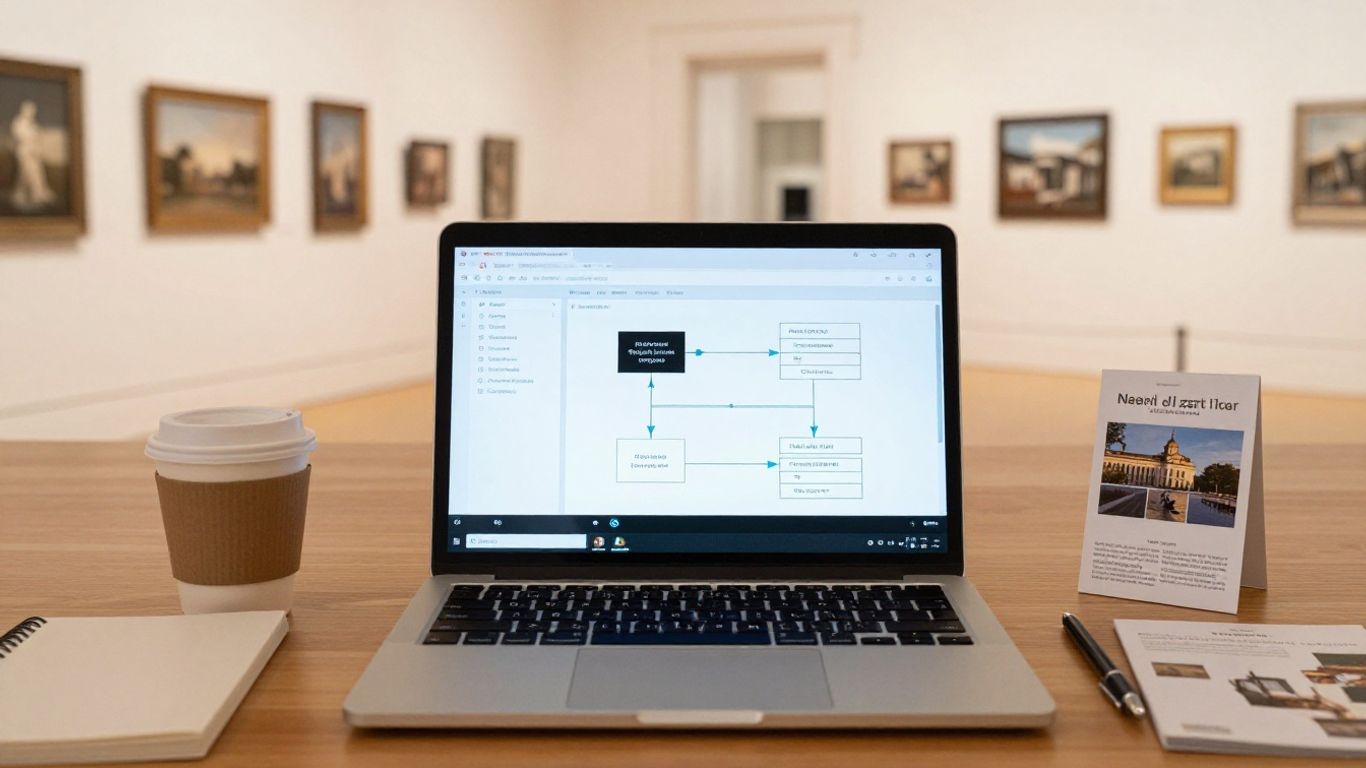
Conducting a thorough audit provides a clear view of where an organisation is losing value to inefficiencies. It is necessary to distinguish between activities that require genuine human empathy and those that simply keep the lights on through redundant data processing. At Noran Design, we often find that teams hold onto manual workflows out of habit, which can be corrected through consistent system review.
Mapping out time-intensive manual workflows
Documentation is the starting point for any audit, as it uncovers the hidden costs in your existing administrative habits. By visualisation of the daily path an enquiry takes through the box office or membership desk, you can pinpoint specific failure points or delays. This process often reveals that the most time-consuming tasks are also the least valuable to the art itself.
Distinguishing between complex human-centric tasks and repetitive data entry
There is a fundamental difference between managing a custom donor relationship and updating an expiry date on a membership list. One requires nuanced emotional labour, while the other is a prime candidate for automation. Protecting the time spent on human connection while offloading the administrative drudgery creates a balanced operational environment.
Prioritising tasks with the highest return on time investment
When choosing where to apply technology first, focus on the tasks that drain the most time across the entire organisation. High-volume, low-complexity tasks offer the biggest immediate relief, allowing your team to see value quickly.
Process | Effort Level | Automation Potential | Impact |
|---|---|---|---|
Email Enquiries | High | Staggering | Immediate |
Grant Reporting | High | Significant | High |
Expense Tracking | Medium | Very High | Medium |
Implementing these changes helps you stabilize your systems while maintaining a high standard of service for your community. Once you see the impact of these initial automations, you can expand your strategy to more complex areas of your daily operations.
Preparing internal documentation for potential automation
Before you can automate, you must explicitly define the steps involved in each task to ensure consistency. Clear internal documentation serves as a guide for any system changes, enabling a smoother transition for all team members. This proactive approach prevents confusion during deployment and helps maintain high data standards.
Streamlining communications and audience engagement
Implementing AI chatbots for general ticketing enquiries
General ticketing questions are often uniform, making them perfect for automated support systems that operate around the clock. By handling routine enquiries, you ensure that potential visitors receive quick responses, improving their overall experience from the start. This allows your live box office staff to focus on complex booking issues that require personal attention.
Automating email responses for box office and membership queries
Automated email flows can manage confirmation, follow-up, and general membership updates without manual intervention. By setting up predefined logic, you can keep audiences informed while ensuring no query is overlooked. This responsiveness is vital to nurturing a loyal audience base while reducing the volume of incoming manual requests.
Personalising donor newsletters using AI analysis
Analysing historical giving patterns through smart data tools allows for more targeted communication with your donor base. Instead of blanket emails, you can now provide updates that reflect the specific interests of individual patrons. This level of personalisation increases the relevance of your outreach and strengthens the bond between the institution and its supporters.
Synchronising social media content outputs
Managing a multi-channel presence often leads to manual data entry across different platforms. Automation tools can bridge this gap by ensuring that critical updates are pushed simultaneously to your social media, web, and email lists. This consistency is vital for maintaining a strong brand voice while saving hours of manual posting time each week.
Simplifying financial management and grant reporting

Financial oversight is a core pillar for any sustainable arts organisation, but it should not require a full-time staff member solely to process paperwork. By consolidating your tools and automating entry, you create a more accurate and transparent system for your board and funders. This reduction in administrative overhead clarifies your financial health and supports better decision-making.
Automating invoice processing and expense tracking
Automated systems can capture invoice data, verify it against purchase orders, and update your accounting ledgers in real time. This minimizes errors that occur through manual entry and provides a real-time snapshot of your spending. Such tools allow you to focus on strategic budgeting rather than chasing receipts or verifying totals.
Using AI to scan and categorise receipts for audits
Receipt management, often a major pain point during the fiscal year-end, can be handled by AI-driven scanning tools. These solutions automatically extract key data and attach it to the correct project or general ledger account. By organising this information as you go, you simplify the audit process significantly and reduce the stress of compliance periods.
Drafting grant applications using generative AI tools
Generative AI serves as a powerful research and drafting partner when preparing to apply for new funding. It can help you synthesise historical project data to demonstrate your impact, ensuring your applications are data-backed and concise. While the human voice remains the primary driver, these tools provide a structured way to present your institution's success. As you explore these strategies, remember that AI automation arts organisation projects should be built on solid foundations, leveraging tools like Automating repetitive work with systems that work in tandem with your existing CRM.
Visualising budget tracking through smart data synthesis
Visual dashboards provide better insight into your financial status than static spreadsheets ever could. By synthesising budget data, you can quickly see which projects are performing well and which are falling behind. This clarity empowers leadership to make informed adjustments to programming, keeping the organisation grounded in reality.
Integrating and managing your AI tool stack
Selecting user-friendly software for non-technical staff
Accessibility is the deciding factor in the success of any software implementation within an arts organisation. Choose platforms that prioritise intuitive interfaces, so your creative teams do not feel overwhelmed by technical complexity. When systems are designed for the people who actually use them daily, adoption rates improve dramatically.
Connecting your CRM, accounting, and email marketing platforms
An integrated tech stack allows for seamless data flow, ensuring that information about a visitor is updated automatically across all touchpoints. When these systems are siloed, you encounter data discrepancies and manual overhead that slow down the entire organisation. Building a foundation where these tools talk to each other is essential for long-term growth.
Establishing an automation-first culture within your team
Culture change requires leading by example and showing that technology is a tool to empower, not inhibit, your staff. You should encourage team members to identify tasks that drain their time and suggest where technology might offer a better path. This collaborative approach leads to higher engagement and more creative solutions for operational problems.
Start by involving key staff in the initial platform selection sessions.
Schedule regular check-ins to monitor how the tools are integrating into daily routines.
Create a shared space for staff to document successful time-saving shortcuts.
Provide hands-on training sessions that focus on real-world scenarios.
These simple steps encourage a shared sense of ownership over your new internal processes. By documenting improvements and celebrating successes, you build a resilient environment where your team feels supported and confident in their digital tools.
Managing software subscriptions and maintenance costs
Keeping track of your software ecosystem prevents cost drift and ensures that you are only paying for tools that genuinely add value. A regular subscription audit helps keep your budget healthy and forces you to sunset tools that no longer serve a function. Regular maintenance is a small price for the long-term benefit of a high-functioning digital infrastructure.
Ensuring data security and ethical compliance
Protecting sensitive audience and donor data
Any digital advancement must start with a commitment to protecting the personal information you hold for your patrons. Robust access controls and encrypted storage are basic but critical necessities for maintaining trust in the digital age. Your data security strategy should be robust enough to handle increasing regulatory demands, protecting both your donors and your reputation.
Maintaining transparency in your use of AI tools
Patrons trust you with more than just their money; they trust you with their data and their focus. Being clear about how you use automated tools, particularly in donor messaging or data analysis, strengthens that bond. Transparency reinforces your brand integrity and prevents misunderstandings that could arise if your audience feels alienated by automation.
Complying with UK GDPR and relevant data protection laws
Regulatory compliance is not optional; it is a critical requirement for every digital infrastructure design project you undertake. Ensuring that your systems are configured for data minimisation, consent management, and rights of access will keep you compliant even as the law evolves. Proper legal alignment prevents expensive mistakes and serves as proof of your organisation's commitment to ethics.
Fact-checking AI outputs to prevent brand reputational damage
AI is a powerful assistant, but it lacks the nuanced historical knowledge and brand sensibility of your internal human team. Never publish or send content generated by AI without a human review that ensures factual accuracy and alignment with your specific voice. Maintaining this standard protects your brand's authority, ensuring that the technology always serves to enhance, not harm, your credibility.
Conclusion
Adopting intelligent systems allows arts organisations to refocus their limited budgets and staff energy toward creating truly memorable impact, rather than just keeping pace with daily administration. When you build infrastructure that scales sustainably and supports the core creative mission, the result is a resilient institution that thrives in an increasingly complex digital landscape. By taking a diagnostic approach to your current systems and implementing solutions like those supported by Noran Design, you can turn operational bottlenecks into strengths. The future of cultural organisations lies in balancing the deep emotional value of the arts with the efficiency of modern operations, creating a clearer path for long-term growth and audience connection.
Frequently Asked Questions
Is it expensive to start implementing AI in an arts organisation?
Starting with AI does not require a large upfront investment, as many solutions can be introduced incrementally through smaller, low-cost steps that solve immediate bottlenecks.
Will AI tools replace the roles of my administrative staff?
AI tools are designed to augment the capabilities of your team by managing repetitive tasks, allowing your staff to focus on more complex, creative, and strategically valuable professional responsibilities.
How long does it usually take to see improvements in efficiency?
Visible progress can often be measured within a few weeks of implementation if the organisation focuses on high-impact, repetitive tasks that have been clearly identified during the initial audit.
Do we need a dedicated technical team to manage these tools?
Modern digital tools are increasingly designed for non-technical users, meaning that most platforms can be managed by your existing staff if you provide them with clear internal guidelines and initial setup support.
What are the biggest risks when automating donor-facing communication?
The primary risks involve loss of the personal touch that donors expect, as well as the potential for generic or incorrect information, which makes human oversight and content review essential.
How do we keep our data safe while using cloud-based tools?
By ensuring that your chosen tools meet modern encryption standards and comply with UK GDPR requirements, you can effectively manage data security while using global cloud platforms for your internal records.
Can AI really help with the difficult process of grant reporting?
Yes, by consolidating project data and assisting with draft structures, automation can significantly speed up the reporting process and ensure that you have consistent, accurate information at your fingertips for funders.