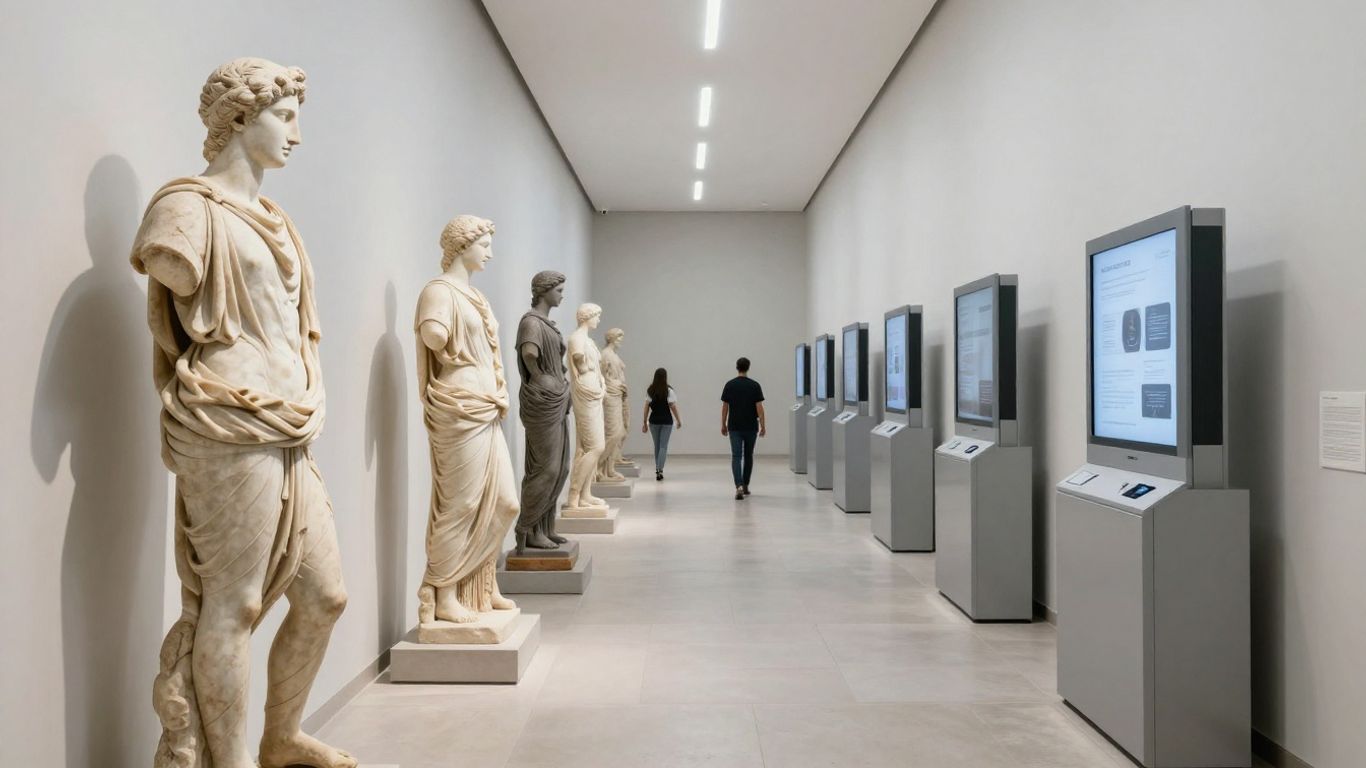
AI enables highly personalised visitor interactions and navigation.
Key Takeaways
AI is fundamentally changing how cultural institutions operate and connect with their visitors. The following points summarise the primary ways technology is helping museums evolve to meet modern expectations.
AI enables highly personalised visitor interactions and navigation.
Accessibility is improved through automated real-time translation and descriptive tools.
Machine learning reduces operational friction in crowd and collection management.
Interactive digital storytelling keeps younger audiences engaged and educated.
Ethical data handling remains crucial for maintaining long-term visitor trust.
Personalising visitor engagement
The way visitors interact with heritage sites is shifting from passive observation to active participation. By integrating intelligent systems, curators can tailor the experience to individual needs while maintaining the integrity of the collection. This shift relies on thoughtful design choices that respect both the physical space and the visitor's time.
Adaptive digital gallery guides
Adaptive guides allow guests to follow paths based on their current location and personal interests rather than traditional, static maps. These tools adjust content in real-time, highlighting pieces that align with a visitor's previous choices or current path through the rooms.
Customised tour recommendations based on visitor interests
Visitors often feel overwhelmed by the sheer volume of material in large collections. Systems that suggest tours based on specific topics, such as local history or art techniques, help ensure every guest finds content they actually care about, much like a curated digital journey.
Real-time feedback mechanisms for exhibit refinement
Galleries are increasingly using digital touchpoints to capture visitor sentiment while an exhibit is still fresh in their minds. Collecting this data allows for rapid adjustments to signage or lighting, helping to keep exhibits relevant without requiring lengthy, static consultation processes.
Enhancing accessibility for diverse audiences
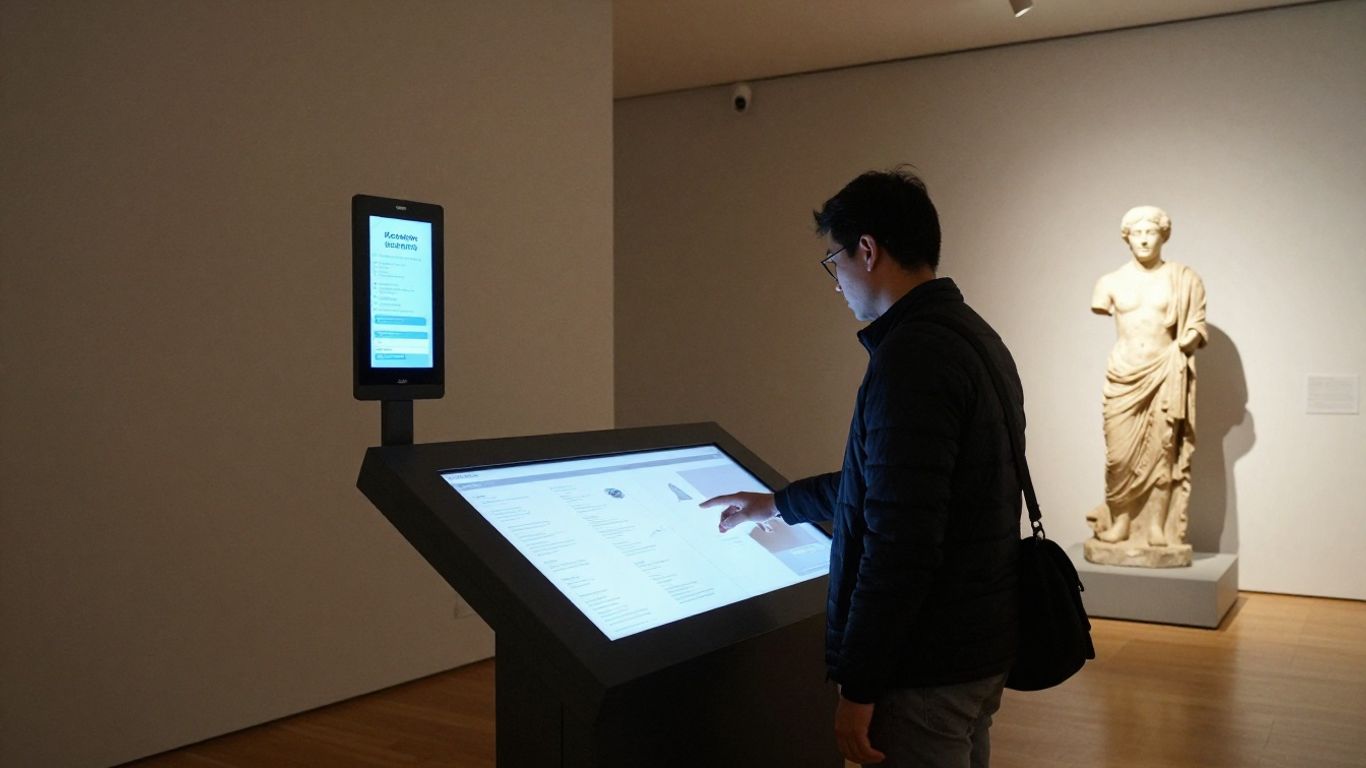
Making collections open to everyone regardless of physical or sensory ability is no longer a luxury but a fundamental necessity. AI-driven solutions are bridging gaps in physical museums by providing autonomous support tools that were previously impossible to implement at scale.
AI-powered audio descriptions for visually impaired guests
Generative technologies can create rich, immediate audio descriptions of static visual art for guests who are blind or partially sighted. This ensures that the aesthetic nuances of a painting or sculpture are conveyed with precision and depth.
Automated sign language interpretation via digital avatars
Digital avatars provide sign language interpretation on demand at various kiosks, ensuring that hearing-impaired visitors receive equal access to historical information. These avatars provide a consistent, responsive presence that eases the burden on human staff while increasing communication efficacy.
Predictive navigation tools for improved mobility access
Predictive tools identify potential bottlenecks in crowded corridors, suggesting alternate routes to visitors who rely on mobility aids. By pre-empting movement conflicts, museums create a more welcoming environment for those who might otherwise struggle to navigate busy spaces.
Optimising collection management and visitor flow
Operational efficiency often dictates the overall quality of the visitor experience, especially in high-traffic urban museums. Modern digital growth strategies involve looking at how to manage these operational bottlenecks to improve both staff productivity and room capacity usage.
Predictive analytics for crowdsourcing and movement patterns
Analysing flow patterns helps organisers place popular exhibits in strategic areas that mitigate congestion. Understanding these metrics allows management to model scenarios before they occur, ensuring that resources are allocated where they are needed most.
Managing queue times using machine learning algorithms
By estimating visitor arrivals and departure rates, museums can dynamically adjust entry times and ticketing availability. This reduces the time guests spend standing in line, which is a common pain point that significantly lowers visitor satisfaction.
Improving accessibility to archived metadata through AI search tools
Collections have historically been trapped in disconnected, manually indexed databases. With recent advancements, institutions can now make vast amounts of metadata searchable, transforming internal repositories into accessible resources for researchers and the public alike.
Leveraging AI for educational and interactive storytelling
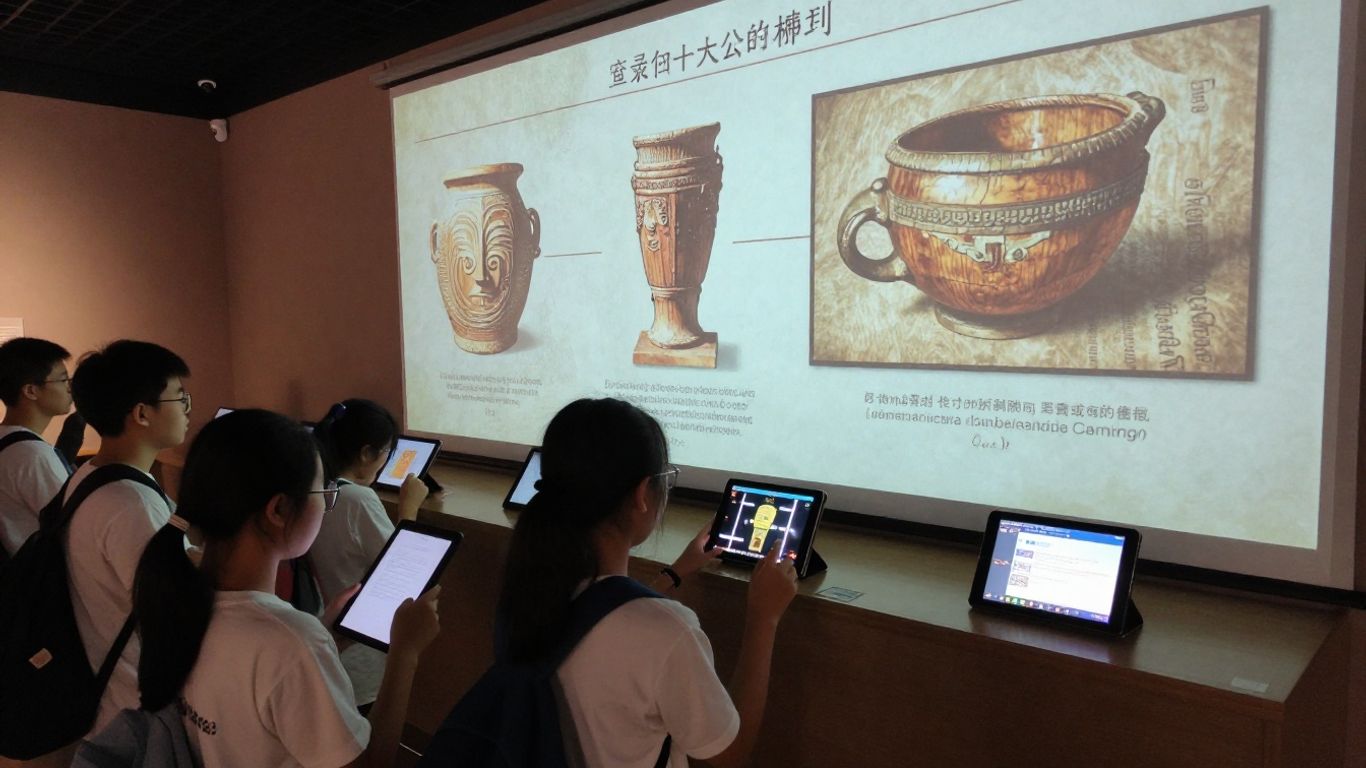
Education is the lifeblood of the museum sector, and digital tools are now allowing institutions to connect with global audiences in deeper, more meaningful ways. These interactions must be designed with clarity to ensure that technology enhances, rather than distracts from, the core historical objective.
Multilingual translation services for global tourists
Global heritage sites use translation tools to provide context in the native languages of their visitors, making their collections accessible to an international audience without needing a full-time staff of polyglots. The following table showcases how these tools improve outreach.
Feature | Traditional Reach | AI-Enhanced Reach |
|---|---|---|
Languages | Usually 2-3 | 30+ Supported |
Costs | High setup | Dynamic updates |
Updates | Slow manual process | Real-time translation |
By implementing these scalable communication systems, institutions can foster a truly inclusive environment that bridges international boundaries.
Gamification and interactive AI-driven quizzes
Interactive software tests visitor knowledge through clever quizzes that change difficulty based on the user's progress. This gamified approach encourages longer stays and deeper engagement as visitors hunt for specific answers hidden throughout the exhibit halls.
Conversations with virtual curators and historical figures
Conversational AI allows guests to "speak" with digital versions of historical figures, learning about objects from a first-person perspective. This unique immersion provides a level of engagement that written placards simply cannot compete with in modern cultural sectors.
Implementing virtual and augmented reality experiences
Augmented reality serves as an essential layer for visitors who want to peel back the history of an object or building without risking physical contact. Integrating these solutions requires a balanced approach to ensure digital experiences serve the primary educational goal.
Generative AI for reconstructing historical environments
Generative systems can rebuild collapsed or missing sites in a virtual space, showing visitors exactly how a room might have looked centuries ago. This type of reconstruction provides context that is impossible to gather from existing ruins alone.
Using computer vision for immersive object interaction
Computer vision allows devices to identify objects and overlay relevant digital lore or repair history directly onto the phone screen. This interaction provides visitors with the ability to see deep-dive details simply by pointing their camera at a display.
Bridging physical exhibits with digital deep-dive materials
Combining physical artifacts with digital extensions encourages longer, more focused visits. This is an area where Noran Design expertise in accessibility compliance and digital strategy helps institutions bridge the physical-digital divide successfully.
Navigating ethical considerations and data privacy
As museums collect more visitor data to refine their services, they must prioritise ethics as much as innovation. A proactive approach to digital safety is essential for any organisation that wants to remain a trusted public space.
Ensuring bias-free training data for AI curation
Curators must be vigilant when choosing the training data that drives their algorithms. If an AI is only exposed to a narrow set of perspectives, it will replicate those biases rather than presenting an objective view of historical heritage.
Protecting visitor data in AI-driven feedback loops
Visitor privacy should never be secondary to data collection goals. Institutions typically look for secure, anonymised ways to gather feedback data, ensuring that personal identities remain protected while still yielding useful insights for operational, long-term improvement.
Balancing digital integration with the preservation of museum intimacy
Technology should support the museum's soul, not overwhelm it. The following list details steps to maintain this balance:
Limit the number of high-glare digital screens in sensitive areas.
Focus on passive, non-intrusive augmented reality options.
Ensure all digital systems can be bypassed for a manual, analog-only visit.
Train staff to mediate conflicts between technology and traditional reflection.
By maintaining this balance, institutions ensure that the primary experience remains one of human connection with heritage.
Conclusion
The integration of technology into the heritage sector represents a shift toward more accessible, engaging, and efficient cultural institutions. By carefully balancing innovation with the preservation of museum intimacy, leadership teams can ensure their organisations remain relevant for future generations, transforming how history and the arts are shared across the globe.
Frequently Asked Questions
Can artificial intelligence replace traditional museum curators?
AI is designed to act as an assistant to human staff, handling repetitive data tasks and providing insights while leaving the final interpretive, ethical, and creative decisions to experienced human professionals.
Are virtual guided tours suitable for school-aged children?
Interactive, gamified tour experiences are often exceptionally effective at maintaining the engagement of younger audiences by providing immediate feedback and a more active learning environment.
Does using technology in museums always cost a lot of money?
While high-end virtual reality setups can be an investment, many AI solutions are based on scalable software that can be implemented gradually, often leading to operational savings over time.
Will digital accessibility features spoil the physical aesthetic of an exhibit?
Modern digital accessibility tools are designed to be minimalist and often run on the visitor's personal device, ensuring they do not clutter or distract from the beauty of the physical gallery space.
Is it safe to share my data during a museum visit?
Most modern institutions handle visitor interaction data through anonymised, secure pipelines designed to meet industry privacy standards, ensuring that data is used for service improvement rather than invasive tracking.
How can smaller museums start integrating AI?
Smaller sites often benefit from "bite-sized" integrations, such as an AI-powered search tool for their existing digital object database, before moving on to more complex virtual reality or immersive experiences.
Does AI technology remove the need for physical objects?
Nothing replaces the emotional experience of seeing the original object, and AI is primarily employed to enhance this encounter by providing richer context and easier accessibility to deeper history.